Aere:
Litz Power Cable
Engineered for the Last Meter and a Half
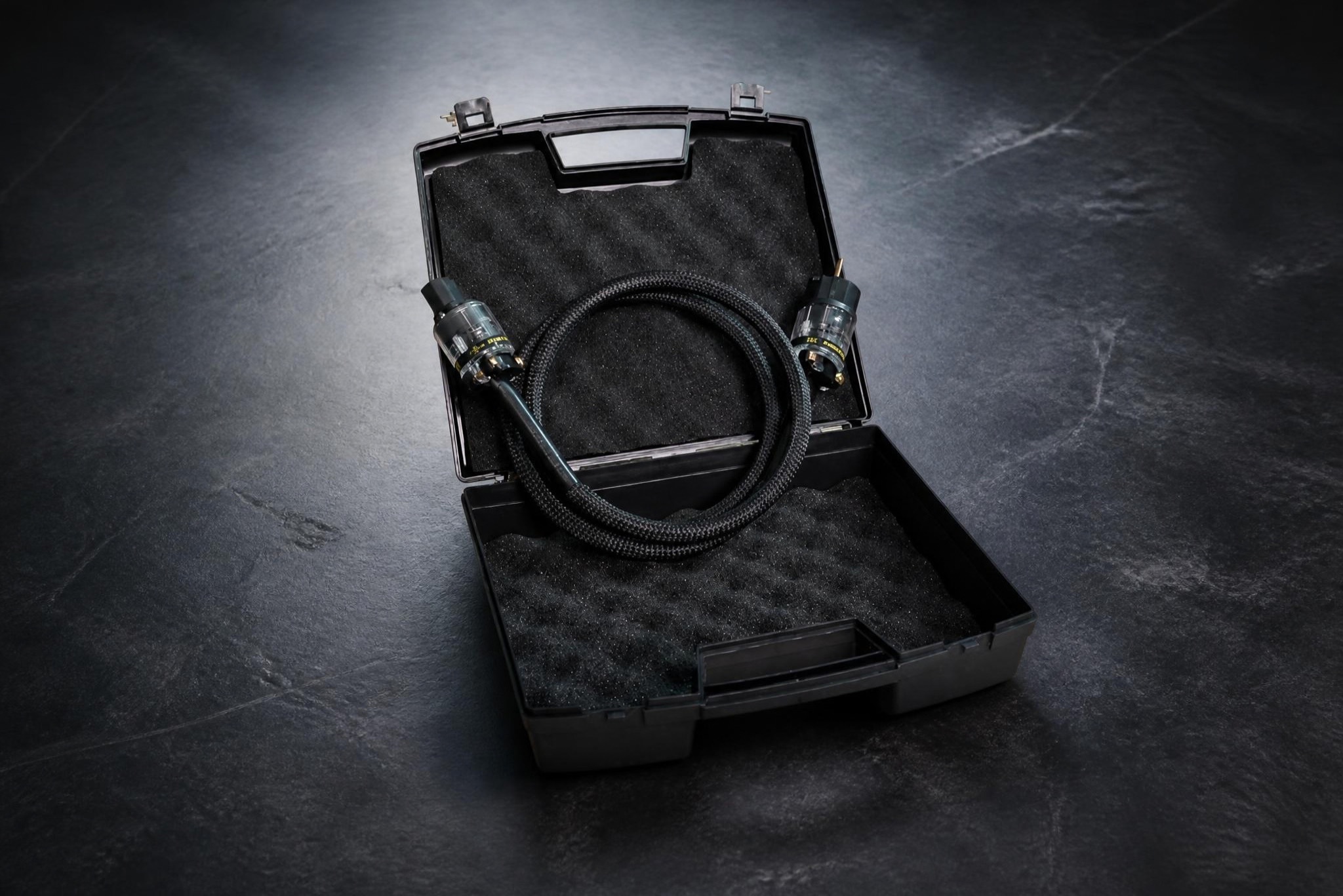
Aere is a power cable designed from first principles: three Litz conductors, Mylar-and-air insulation and a self-shielding twisted geometry. No exotic materials, and no claims that physics cannot support. A cable cannot improve an audio system; it can only avoid making it worse. Aere is built so that the power cable is never the weak link in the chain.
Video presentation (in Italian)
Design Philosophy: The Simplest Solution That Works
Why the Power Cable Matters
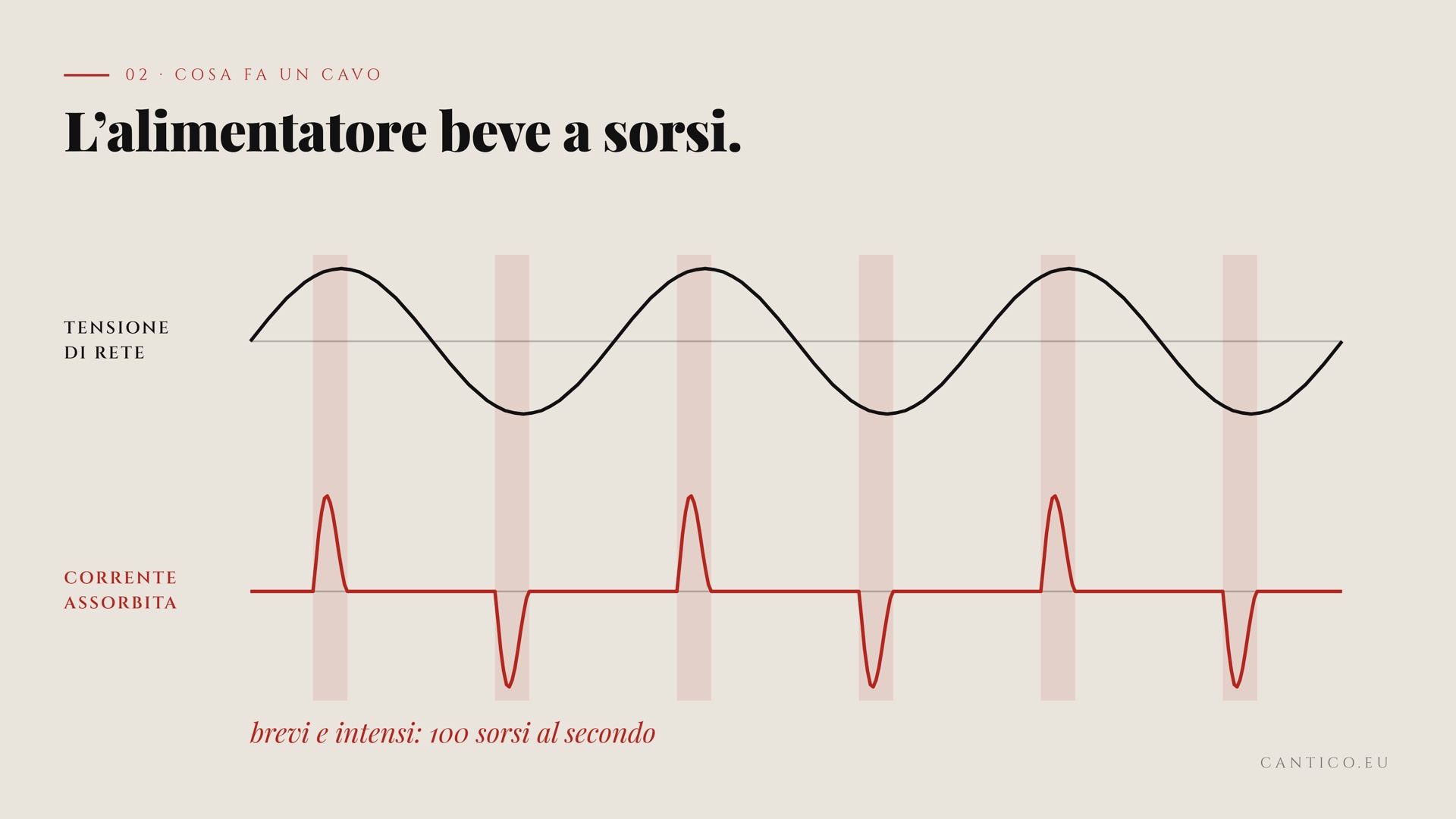
A power supply does not draw current continuously at 50 Hz. It draws short, intense pulses a hundred times a second, and their amplitude follows the signal being amplified. The current flowing through a power cable therefore covers a far wider spectrum than the mains frequency. The closer you get to the equipment, the more the cable’s characteristics count: the last meter and a half, with its contacts, is where a power cable can really make a difference.
Key benefits:
- Low losses at high frequencies, not just at 50 Hz
- A ground conductor that stays effective at high frequencies
- Conductivity that does not degrade over time
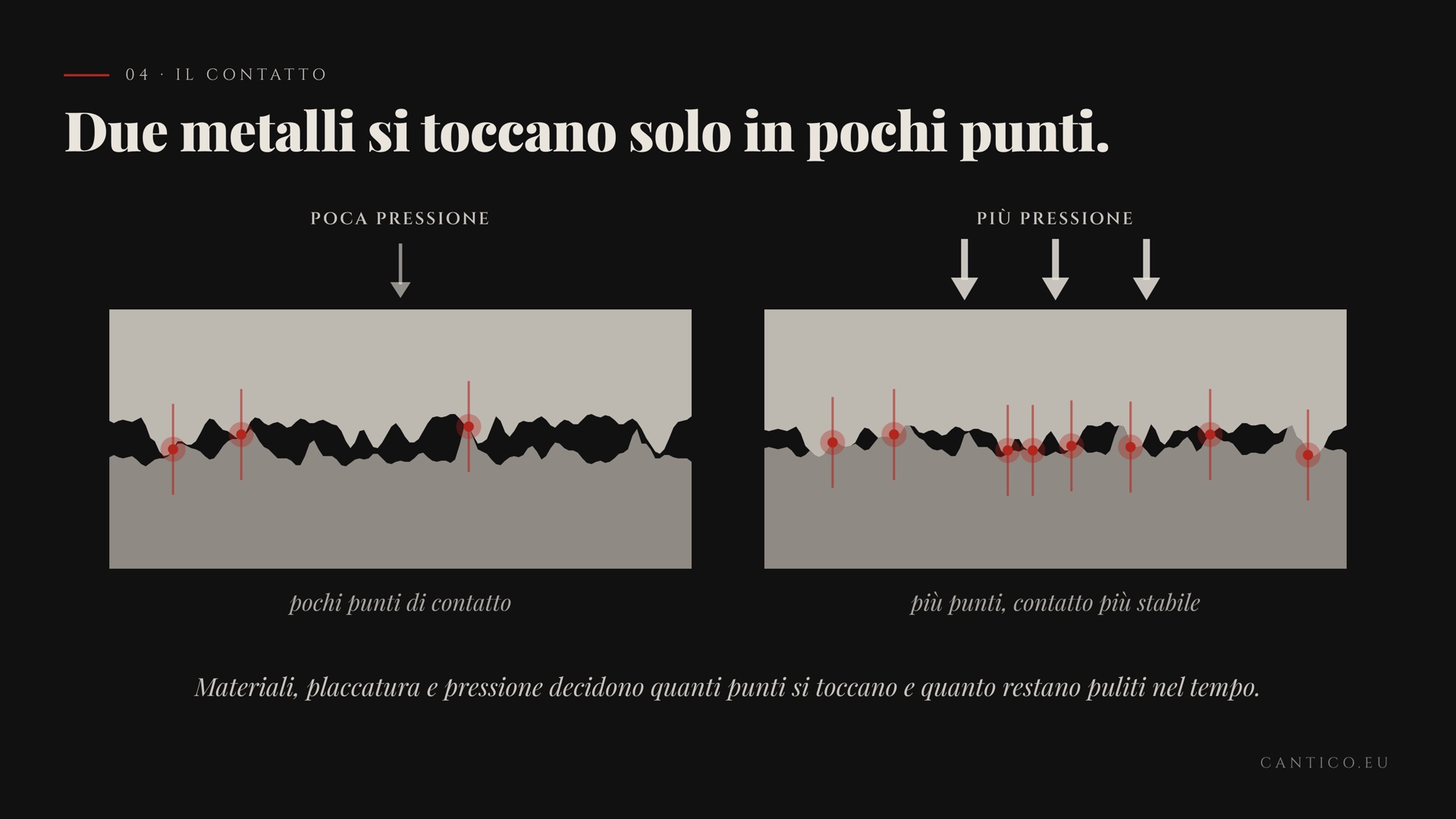
- Reliable contacts at both ends
Advanced Engineering Solutions
Litz Conductors
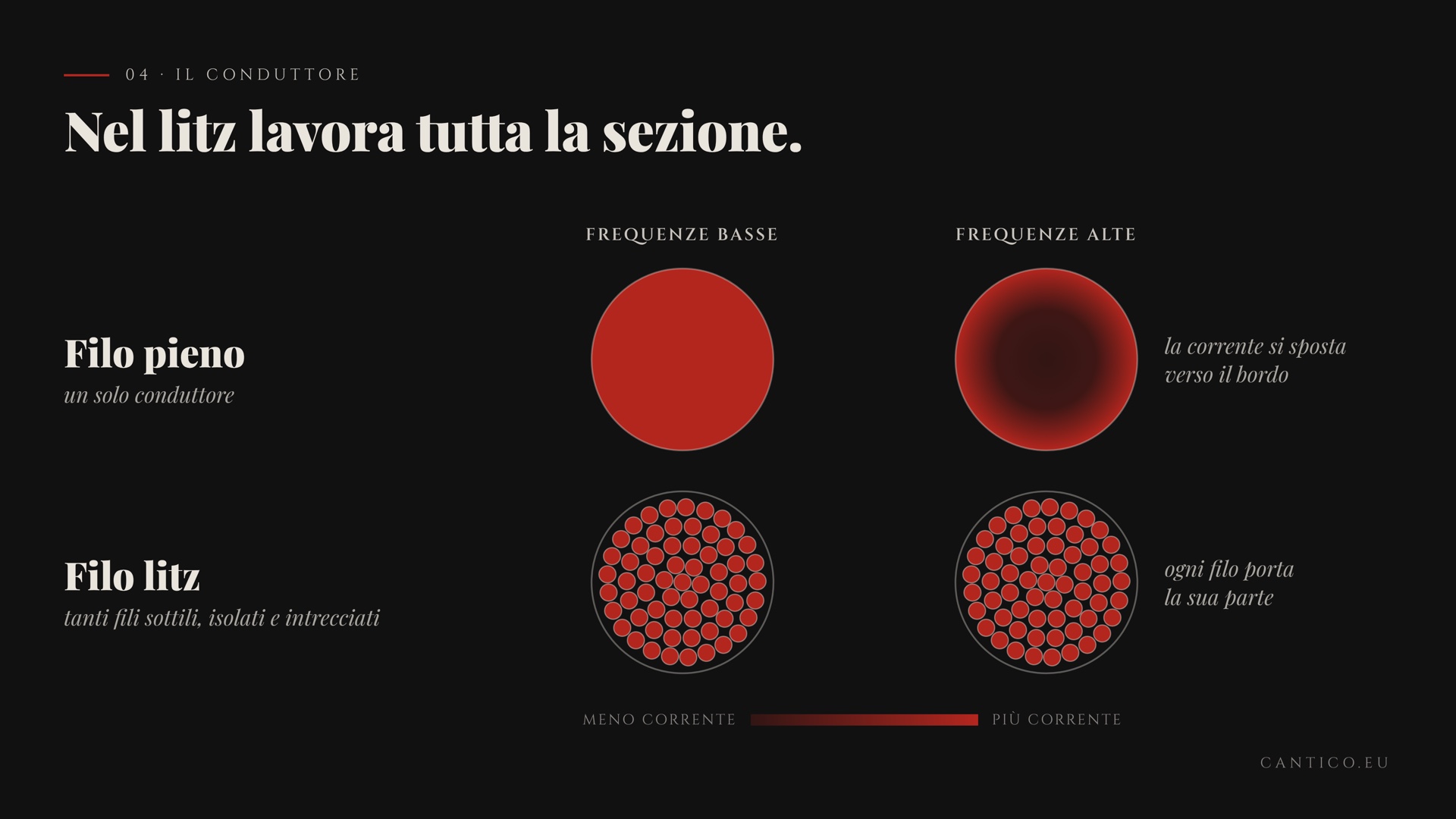
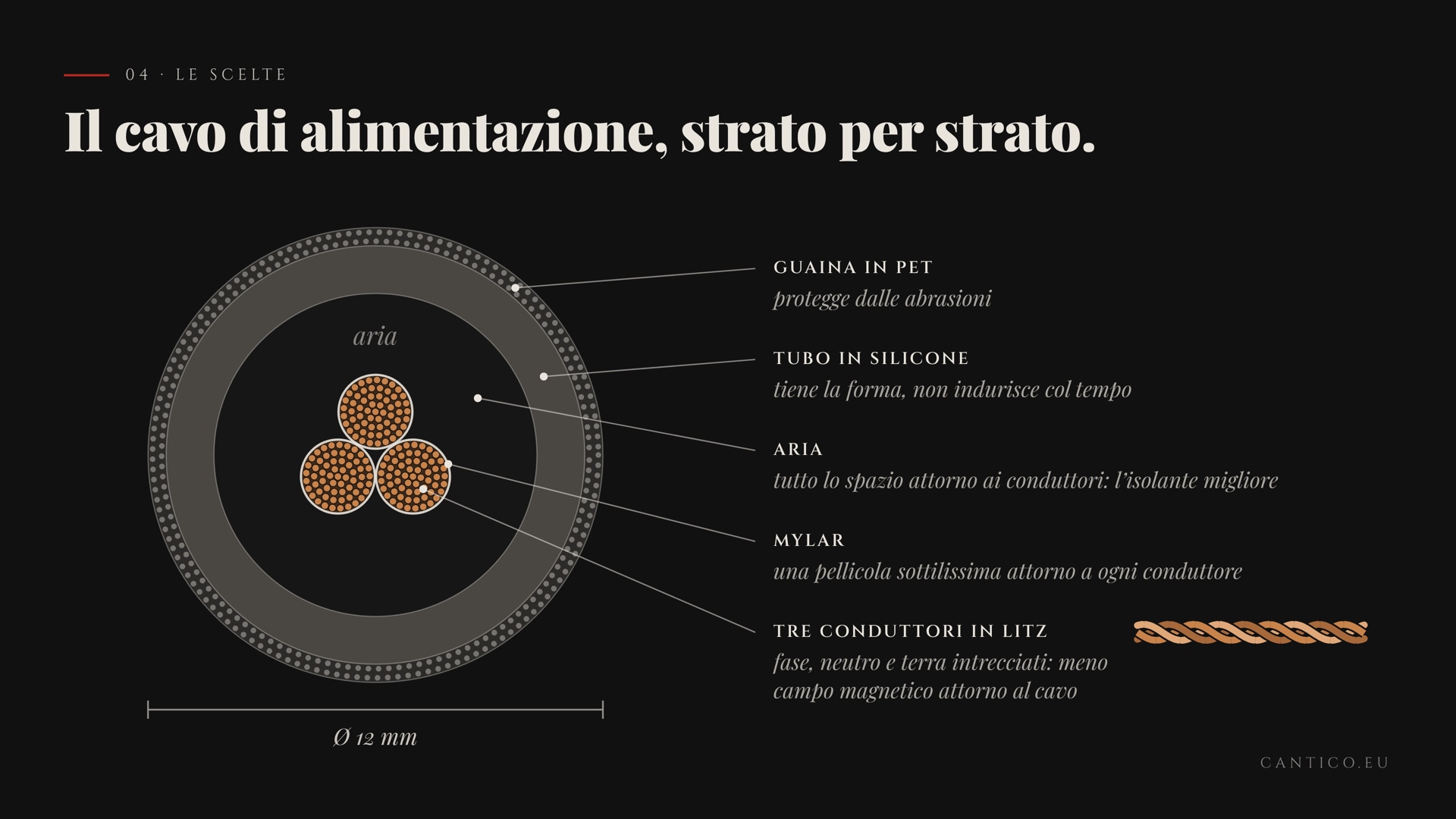
Phase, neutral and ground are each made of 140 strands of 0.2 mm copper, individually enameled and insulated from one another, for a cross-section of about 4.4 mm². In a solid wire, or in ordinary stranded wire whose strands touch, current crowds toward the surface as frequency rises: this is skin effect, and it increases resistance and losses. In 0.2 mm strands skin effect becomes negligible, and every strand carries its share of the current. The conductor was designed considering everything from DC to 200 kHz, well beyond the audio band, to keep a safe margin.
Technical advantages:
– The whole copper section works at every frequency of interest
– The ground is Litz too: a solid ground wire drains high-frequency disturbances poorly
– The enamel seals the copper from air and moisture, so it does not oxidize
– A generous cross-section in a flexible cable
Mylar and Air Insulation
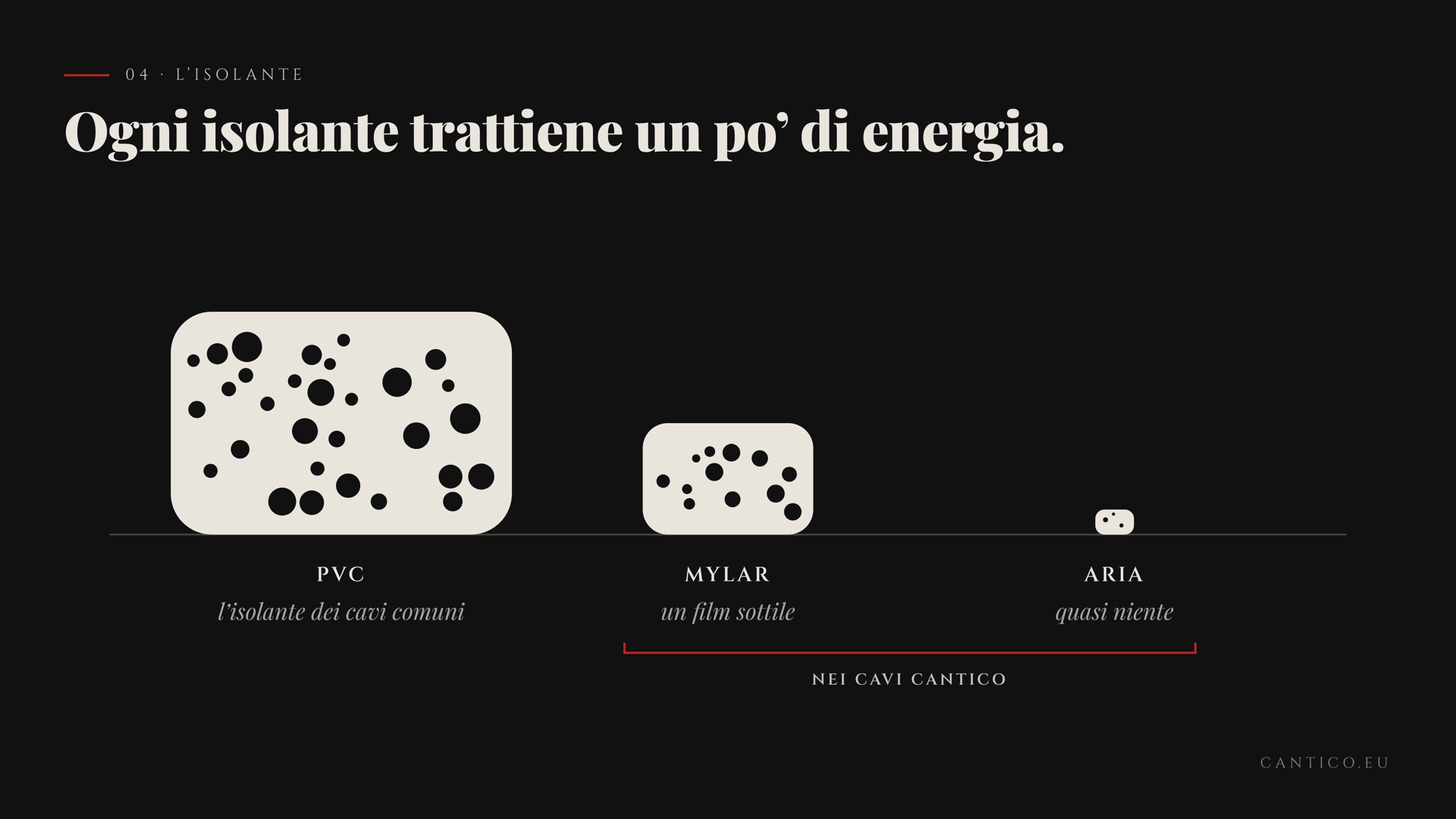
Every dielectric placed around a conductor retains a little charge: the thick PVC of ordinary cables retains a lot, air practically none. In Aere each conductor is wrapped in a Mylar film just a few microns thick, and around 80–90% of the volume surrounding the conductors is air. Materials that look ideal on paper, such as Teflon, were ruled out: Teflon is piezoelectric and generates noise when mechanically stressed. The Mylar also protects the conductors from abrasion and gives the cable a breakdown voltage of several kilovolts. Hence the name: aere is the word for air in Saint Francis’s Canticle of the Creatures.
Self-Shielding Geometry
The three conductors are twisted together. The electromagnetic fields they generate stay inside the cable, and external interference is not picked up, with no shield needed. A shield was tried during development and then removed: the cable performed better without it.
Medical-Grade Silicone and PET
The conductors run inside a medical-grade silicone tube that stays flexible and keeps the internal geometry unchanged over time. An outer PET sleeve protects it from abrasion. Outer diameter: 12 mm.
Furutech Connectors
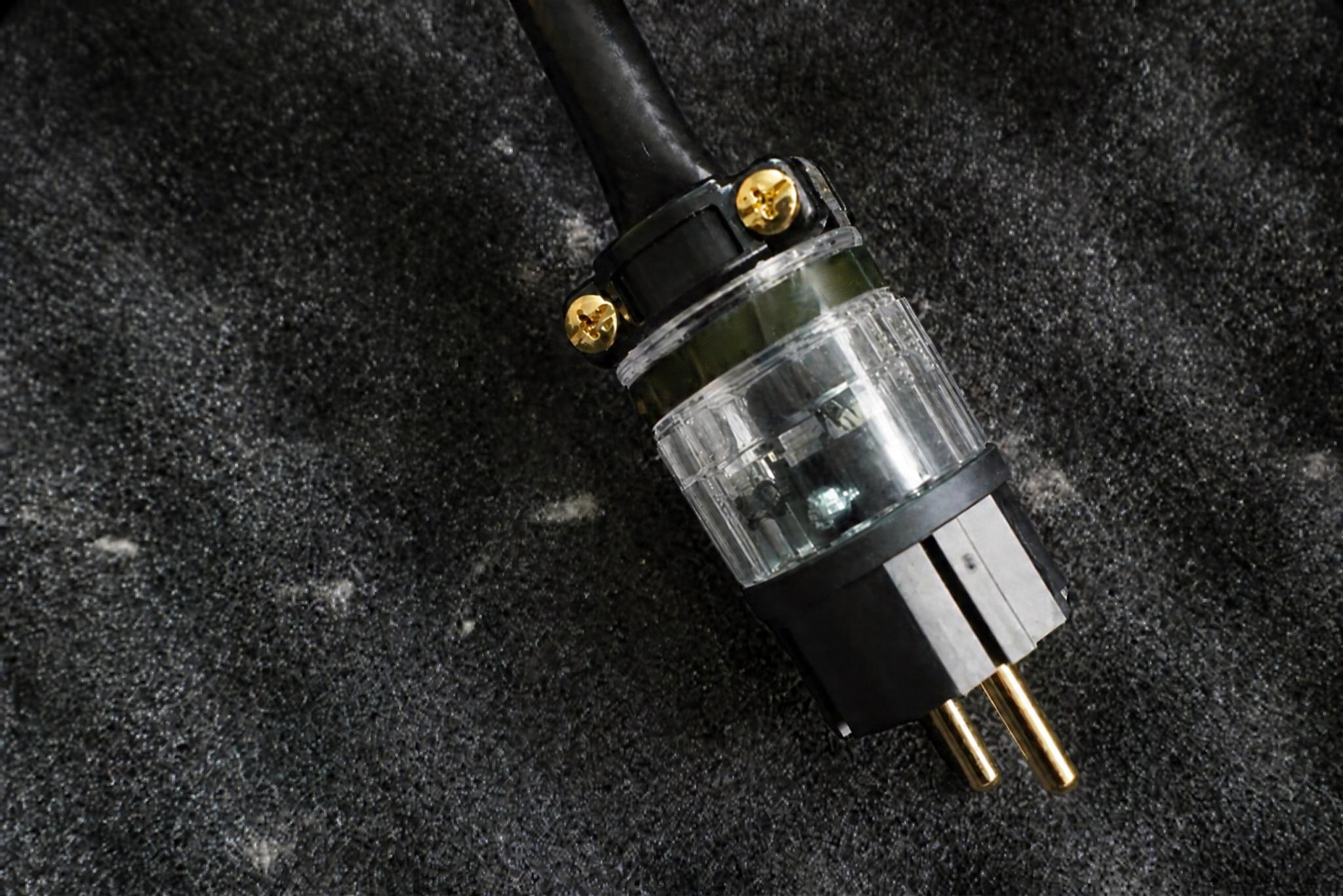
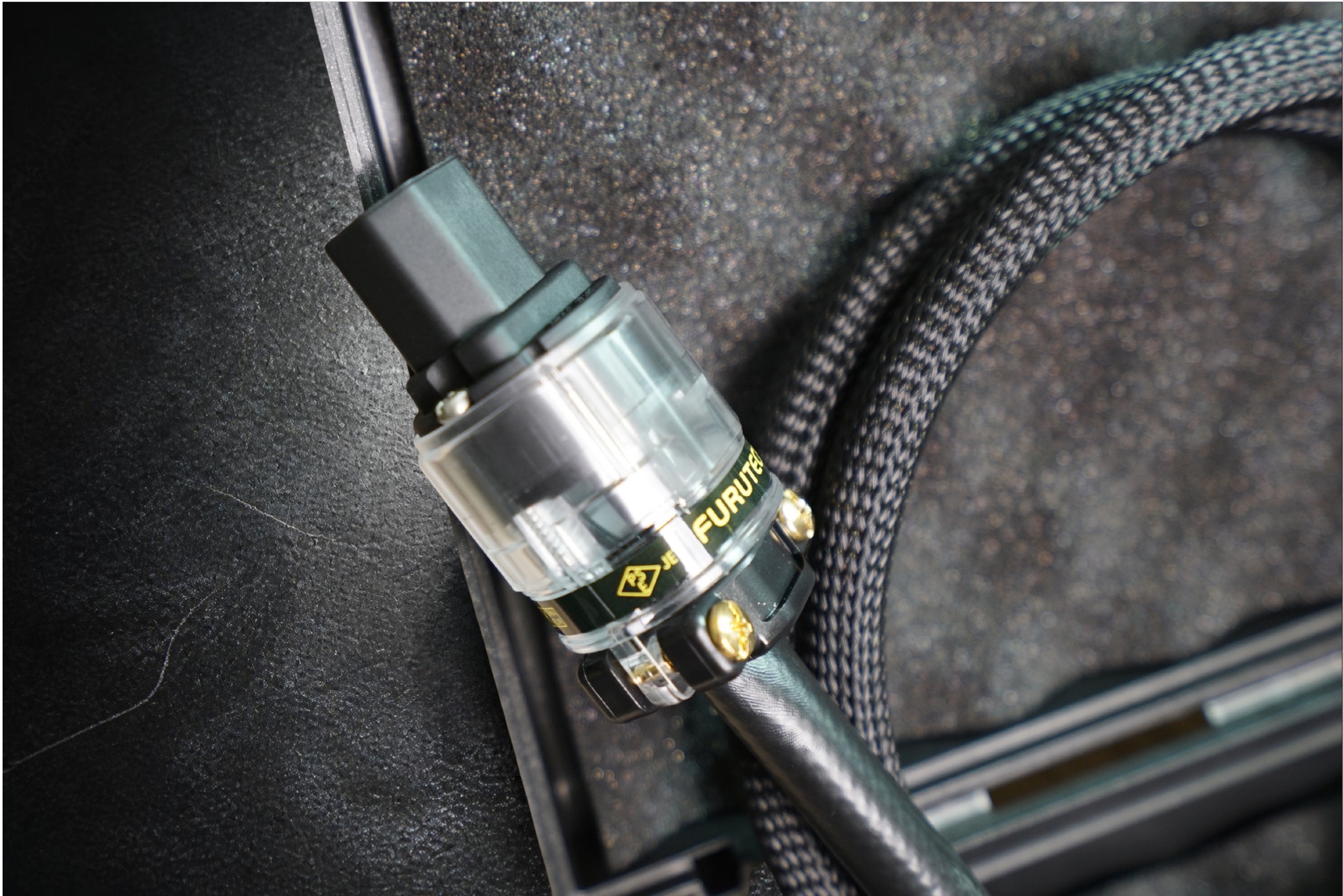
The plug and the IEC connector are Furutech. This is not a choice of brand: none of the less expensive connectors we tested offered comparable contacts and workmanship, and the contacts between wall socket, plug and equipment are among the most critical points for current flow.
Hand Assembled
Each cable is built by hand. The Litz wire is cut, laid out and left to relax, and its ends are tinned immediately so that the fine strands cannot spread.
Theory, Measurement, Listening
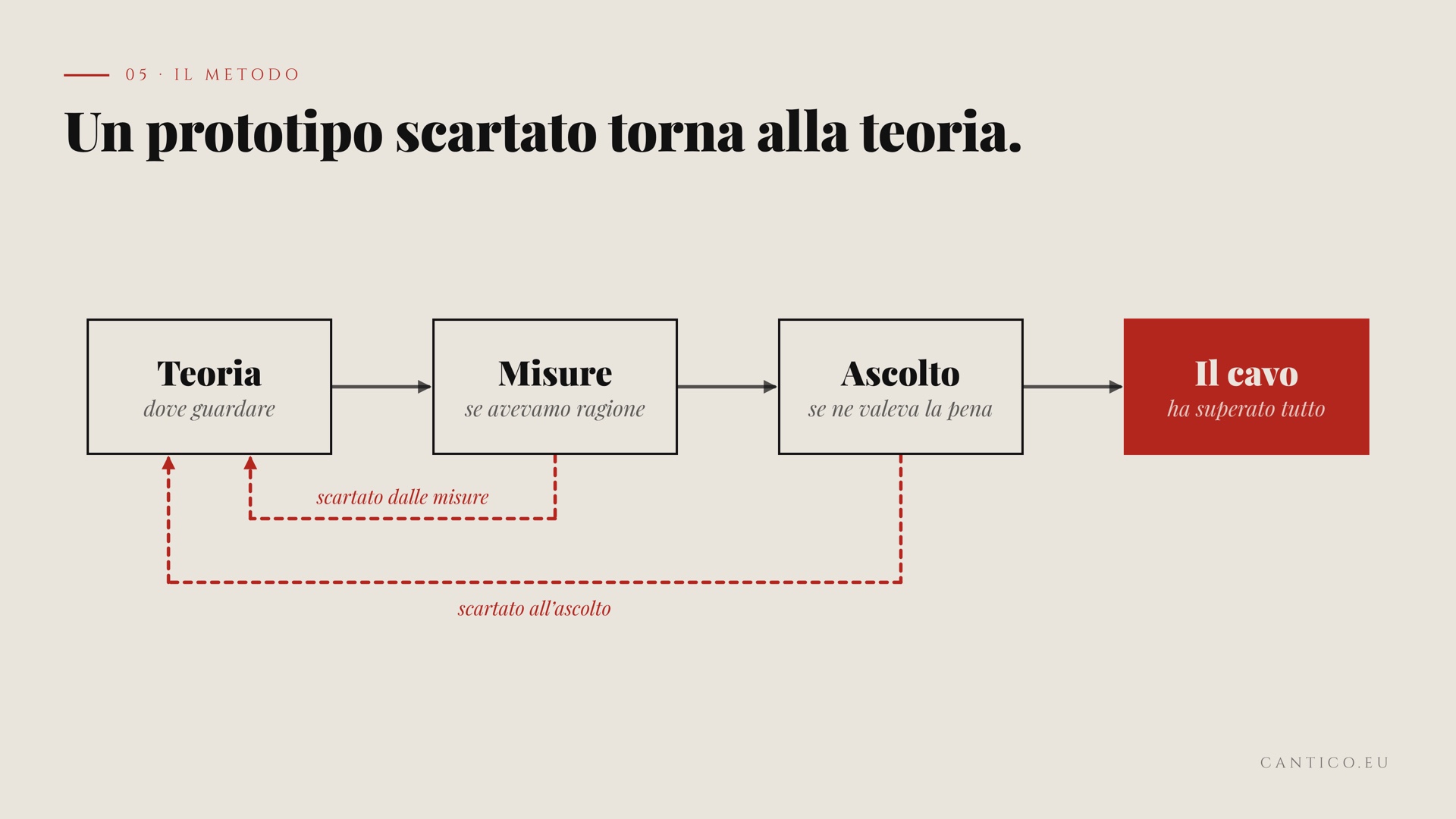
Aere was developed in three stages. Theory told us what to build: no carbon nanotubes, no superconducting alloys, just the best conductor, insulation and connectors that can be used in practice. Measurements on the most promising prototypes showed where we were right and where we were wrong. Then came listening: trusted listeners, who did not know which cable they were hearing, compared the prototypes with reference cables costing three to four times as much.
Technical Performance
- Conductor behavior considered from DC to 200 kHz
- Mylar and air instead of thick PVC: minimal stored charge
- Breakdown voltage of several kilovolts
- Stable conductivity over time
Audiophile Refinement
- Correct tonal balance, with every range in proportion
- Realistic, information-rich highs and a natural midrange
- Controlled, present bass: impulsive when needed, delicate and articulate when needed
- Built to stay: in ten years it will behave as it does today
Technical specifications
- Type: Power cable
- Length: 1.5 m
- Conductors: 3 Litz conductors (phase, neutral, ground), 140 enameled strands × 0.2 mm each
- Cross-section: approx. 4.4 mm² per conductor
- Insulation: Mylar film on each conductor, air
- Geometry: Twisted, self-shielding, unshielded
- Jacket: Medical-grade silicone tube, PET outer sleeve
- Outer diameter: 12 mm
- Connectors: Furutech plug and IEC connector
- Manufacturing: Hand-assembled in Italy
Aere adds nothing to a system, and it is built to take nothing away. Words only go so far, though: these cables have to be heard.
Silvio Germano Ricci
Owner e Founder