Cables

Aere Speaker Cable

Aere:
Litz Speaker Cable

Engineered to Let the System Play

Aere is a pair of speaker cables designed from first principles: two Litz conductors in a simple twisted pair, Mylar-and-air insulation and connectors chosen for how they make contact. No exotic materials, and no claims that physics cannot support. A cable cannot improve an audio system; it can only avoid making it worse. Aere was born for systems like those built around the J-DAC and Cantico loudspeakers, where it would be a shame to let the cables undo the work done on the electronics and speakers.

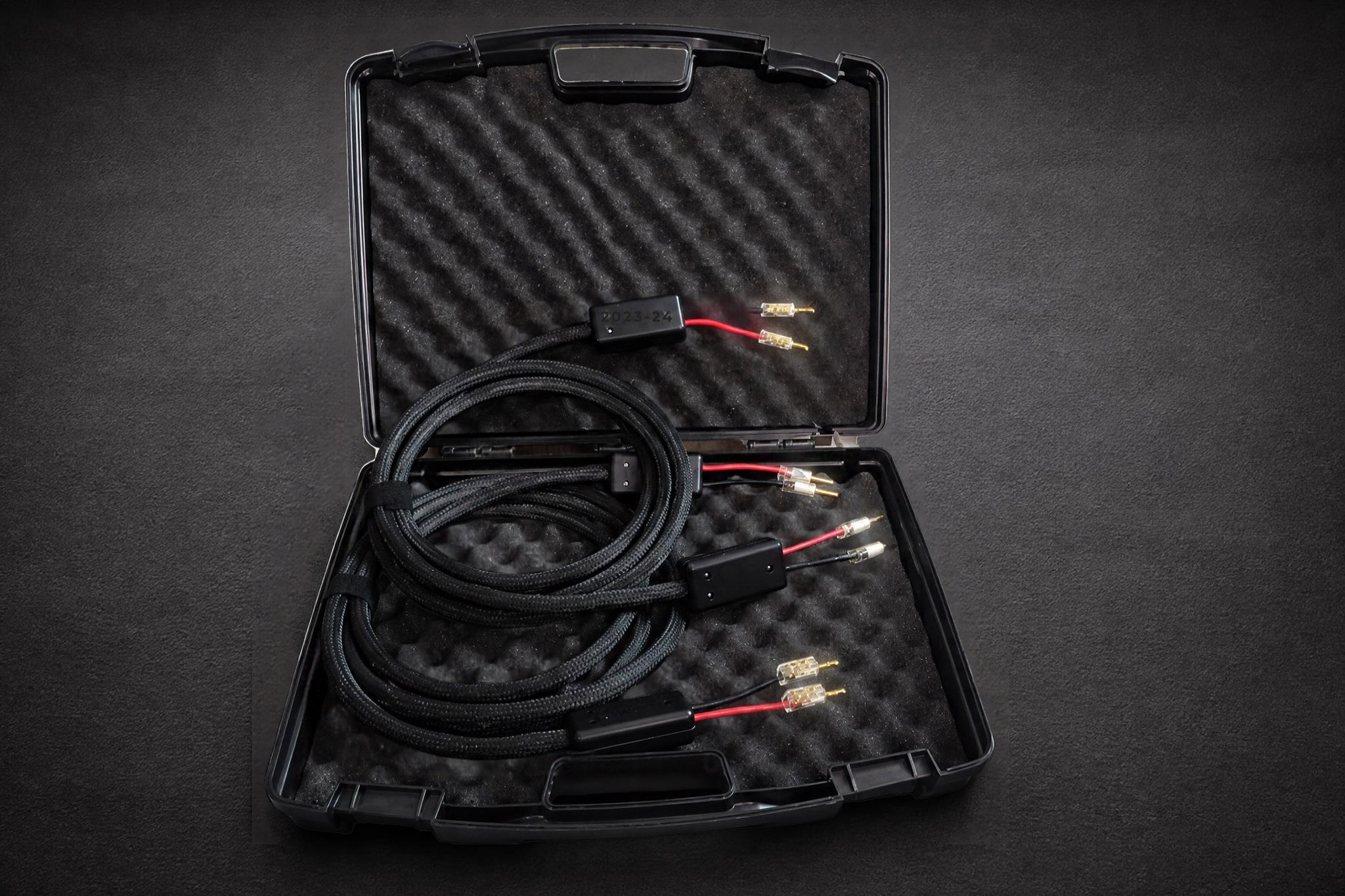
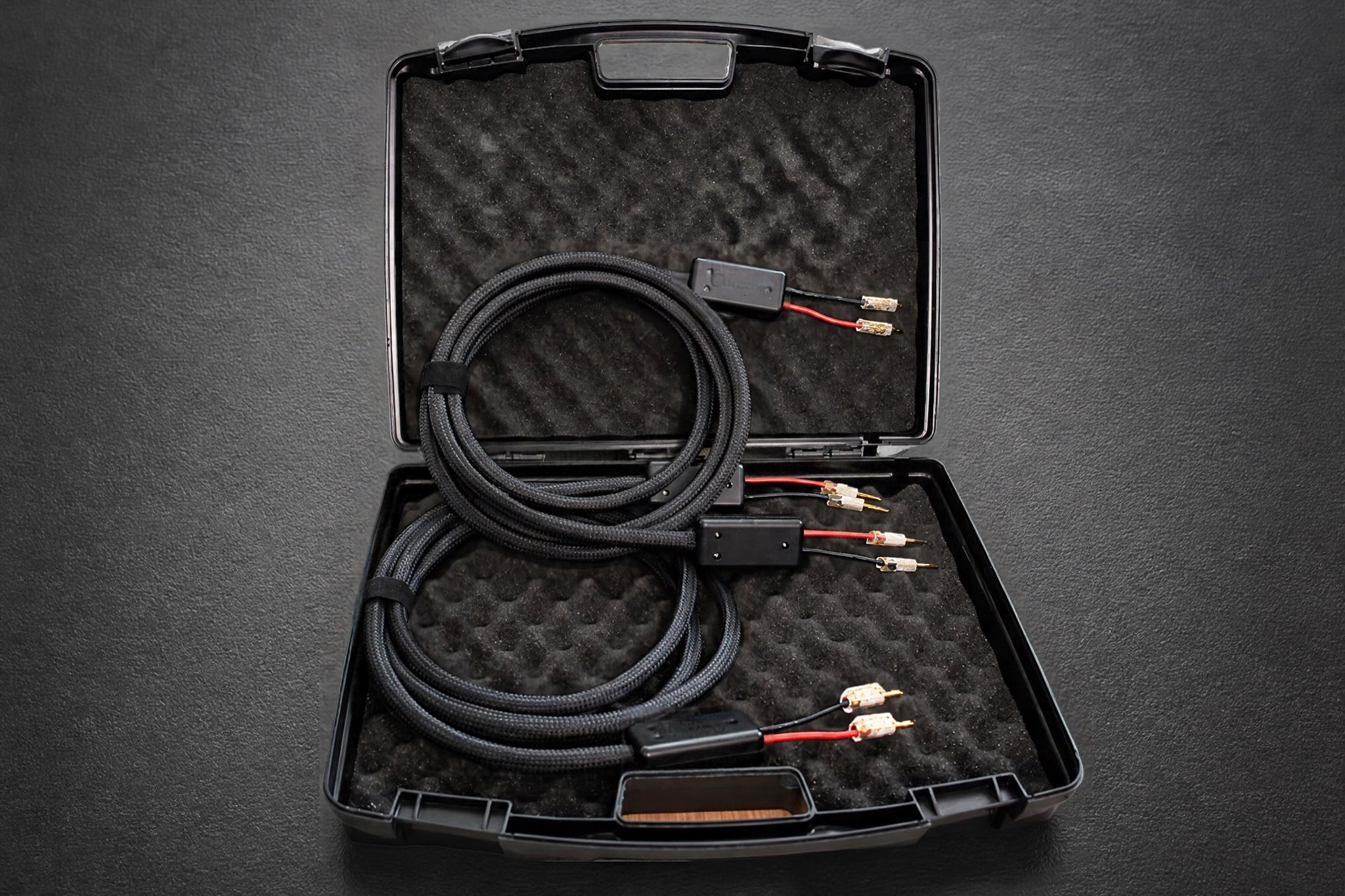
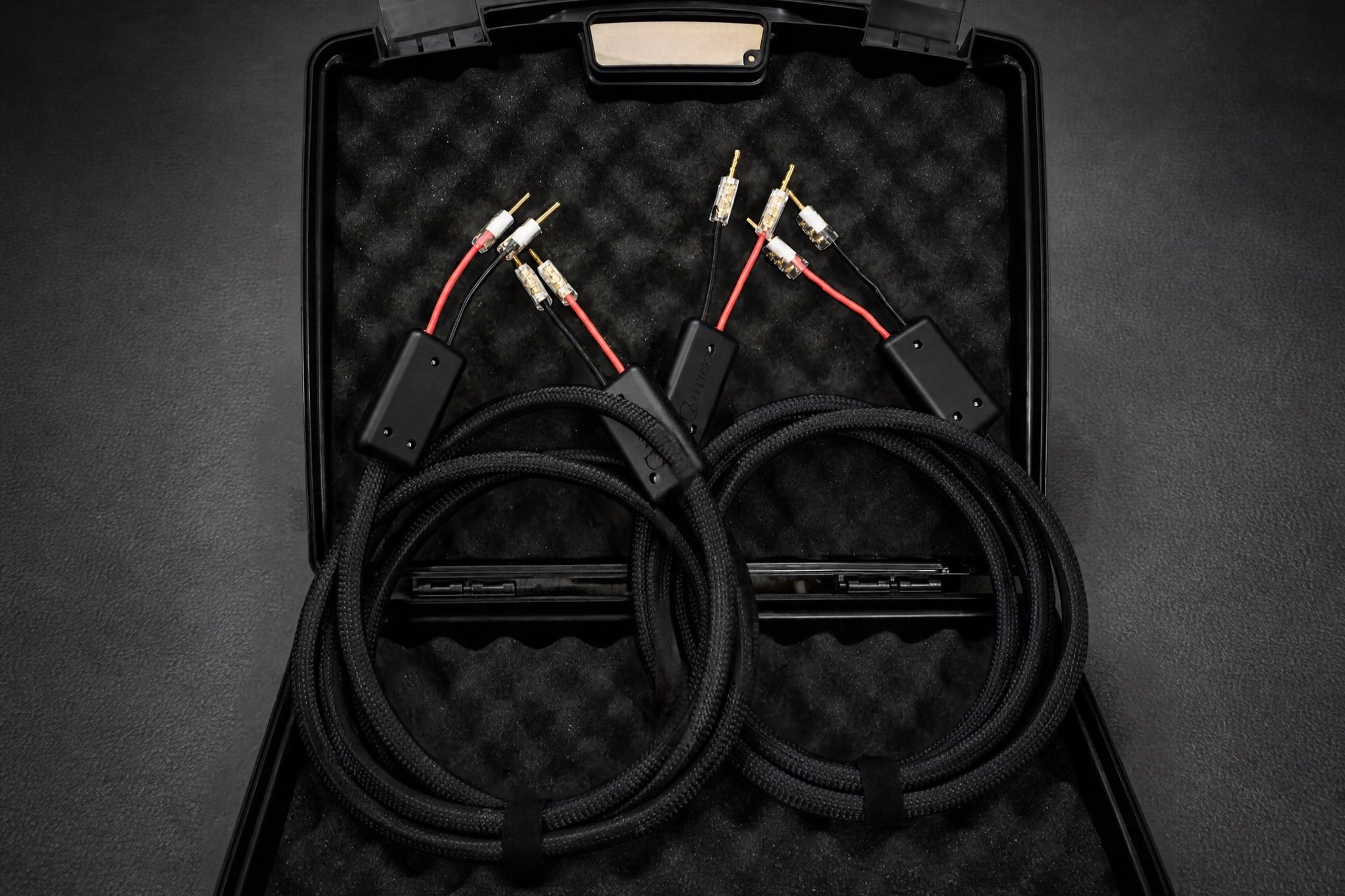
Cantico Aere speaker cables in their carry case
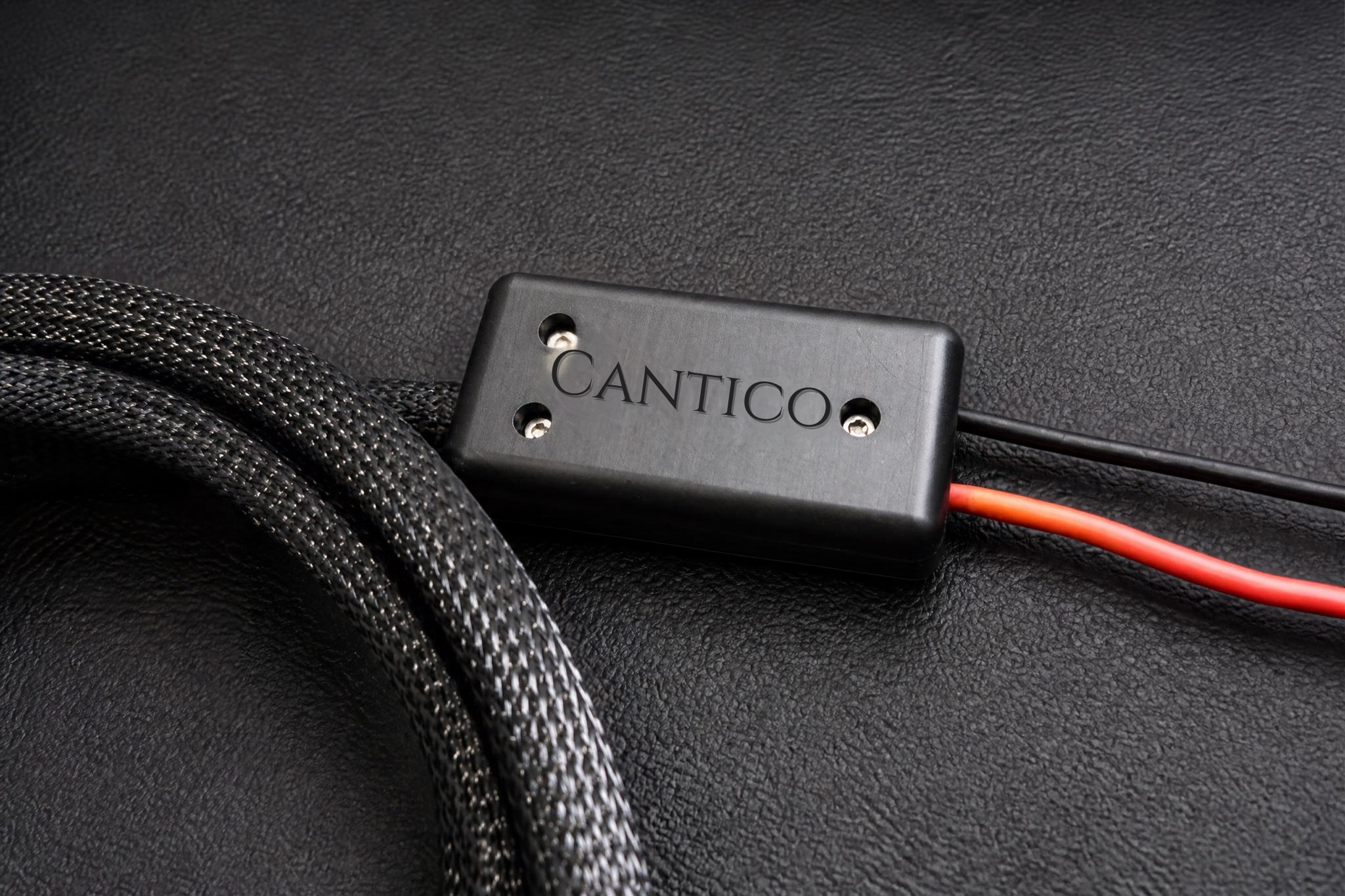
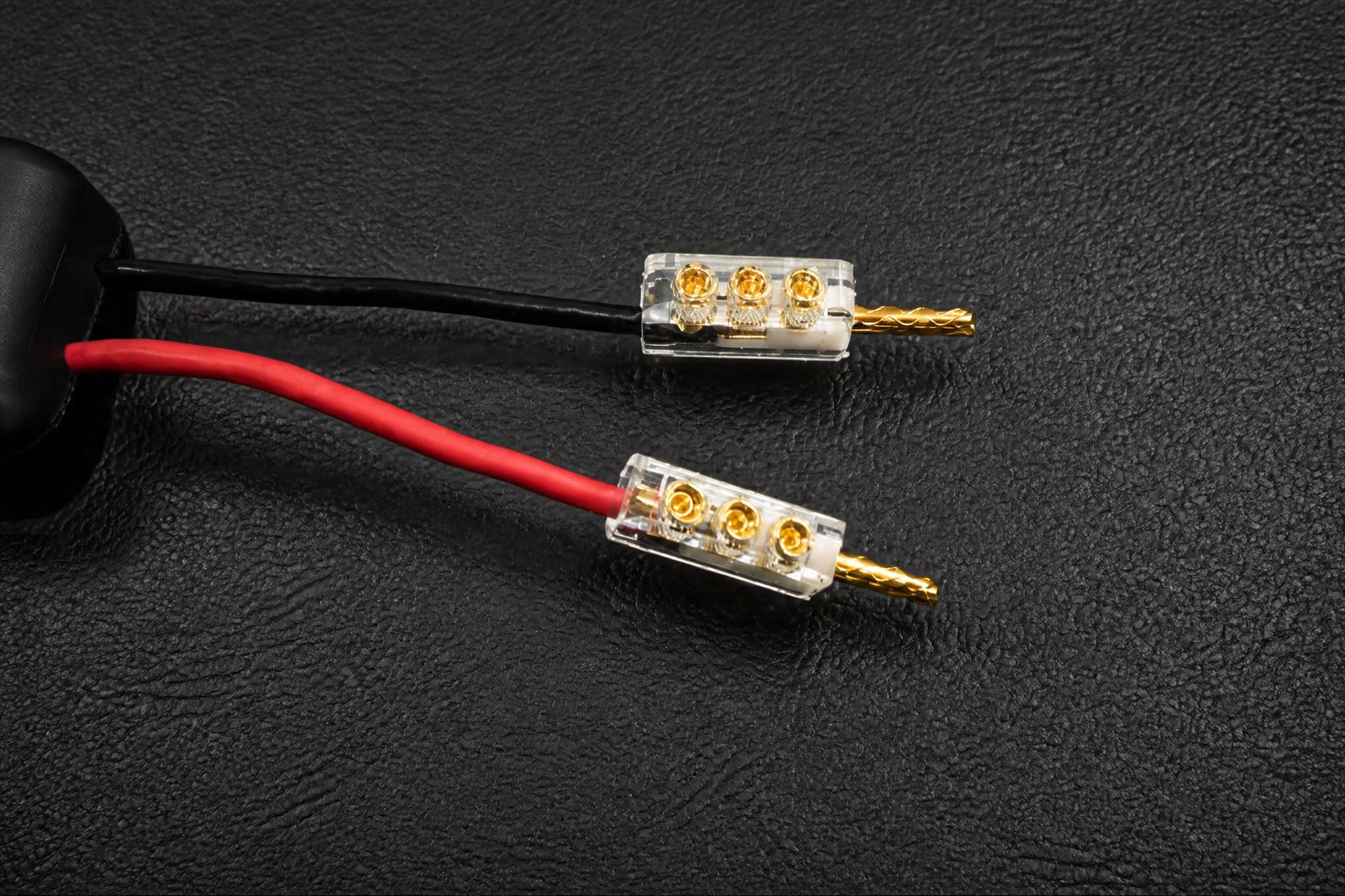
Cantico-branded junction on the Aere speaker cable

Video presentation (in Italian)

Design Philosophy: Let the System Play

A Demanding Signal

A speaker cable carries a current signal from the amplifier to the loudspeakers, spanning 20 Hz to 20 kHz: three orders of magnitude. Its resistance, capacitance and inductance act on all of it. Aere was designed with three goals: to sound right, to work with any amplifier, and to keep doing so over time. Some cables have such extreme electrical characteristics that certain amplifiers struggle to drive them; Aere avoids them by design.

Key benefits:

  • Correct tonal balance across the whole range
  • An easy load for any amplifier
  • Performance that does not change over the years
  • Flexible and easy to route

Advanced Engineering Solutions

Litz Conductors

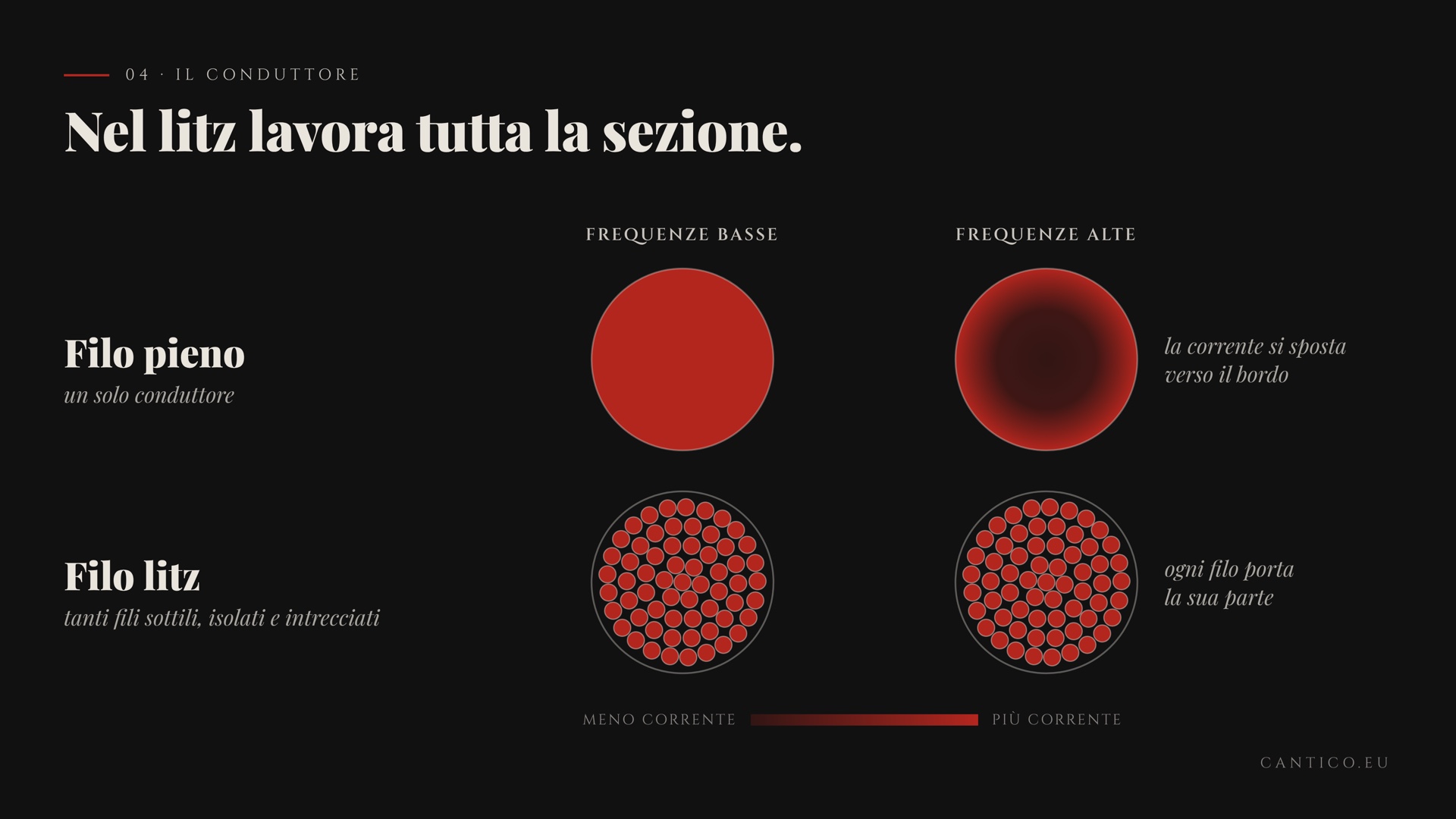
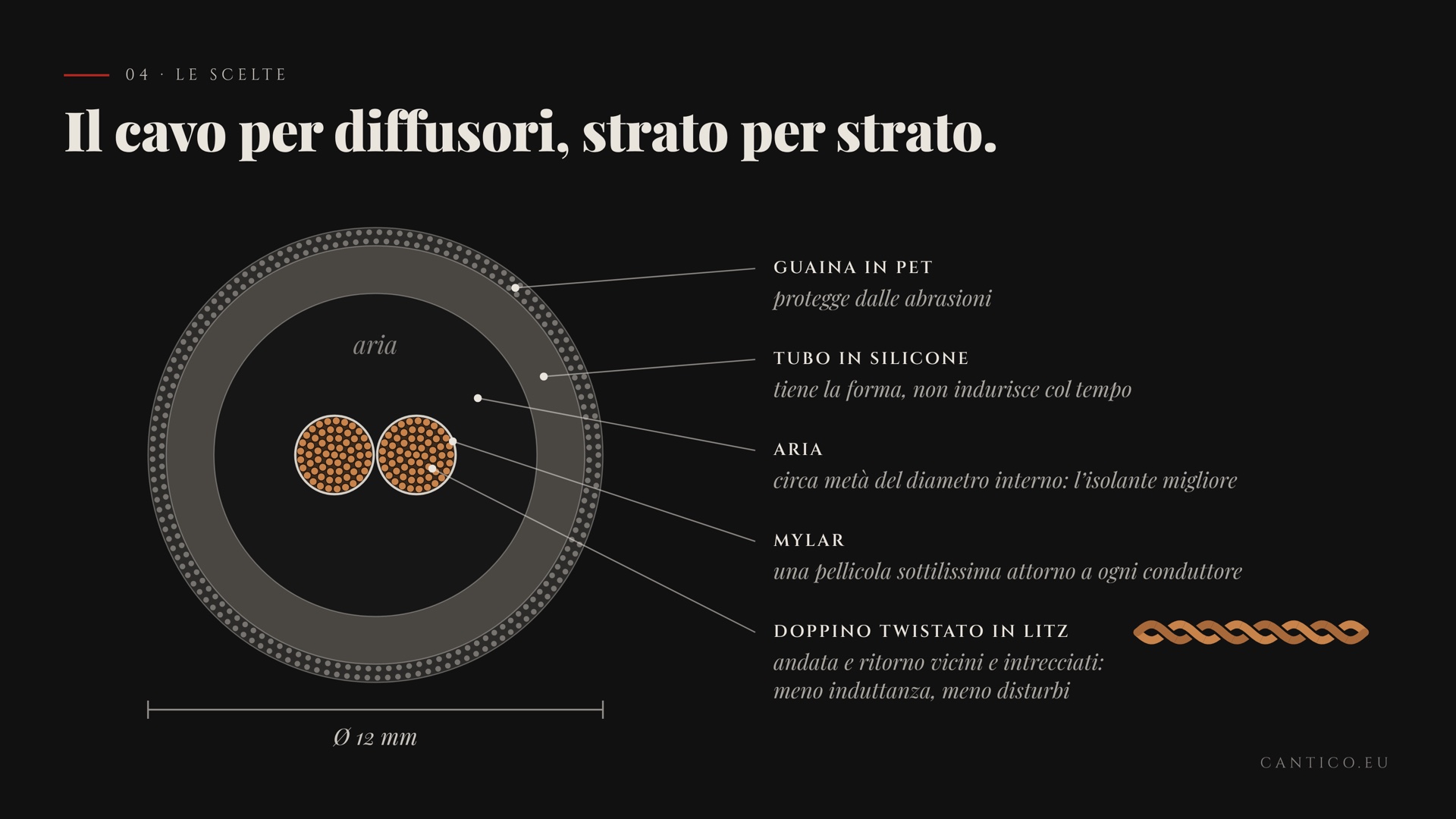
Each cable consists of two Litz conductors, each made of 140 strands of 0.2 mm copper, individually enameled and insulated from one another, for a cross-section of about 4.4 mm². In solid or ordinary stranded wire, current crowds toward the surface as frequency rises (skin effect), increasing resistance and losses. In 0.2 mm strands skin effect is negligible across the audio band and well beyond, so the whole section of the conductor works. The enamel also seals the copper: in conventional cables oxidation creeps along the conductor surface, exactly where the high-frequency signal travels.

Twisted-Pair Geometry

The outgoing and return conductors run side by side, twisted together. Inductance stays very low and distributed capacitance relatively low: values any amplifier can drive comfortably. The geometry is self-shielding, keeping electromagnetic fields inside the cable without a shield; during development, adding a shield increased capacitance and made the cable worse. Simple is not the same as easy: conductor size and twist pitch are the result of months of prototypes and refinements.

Technical advantages:
– Very low inductance
– Relatively low distributed capacitance
– No shield, no added capacitance
– Electromagnetic fields contained within the cable

Mylar and Air Insulation

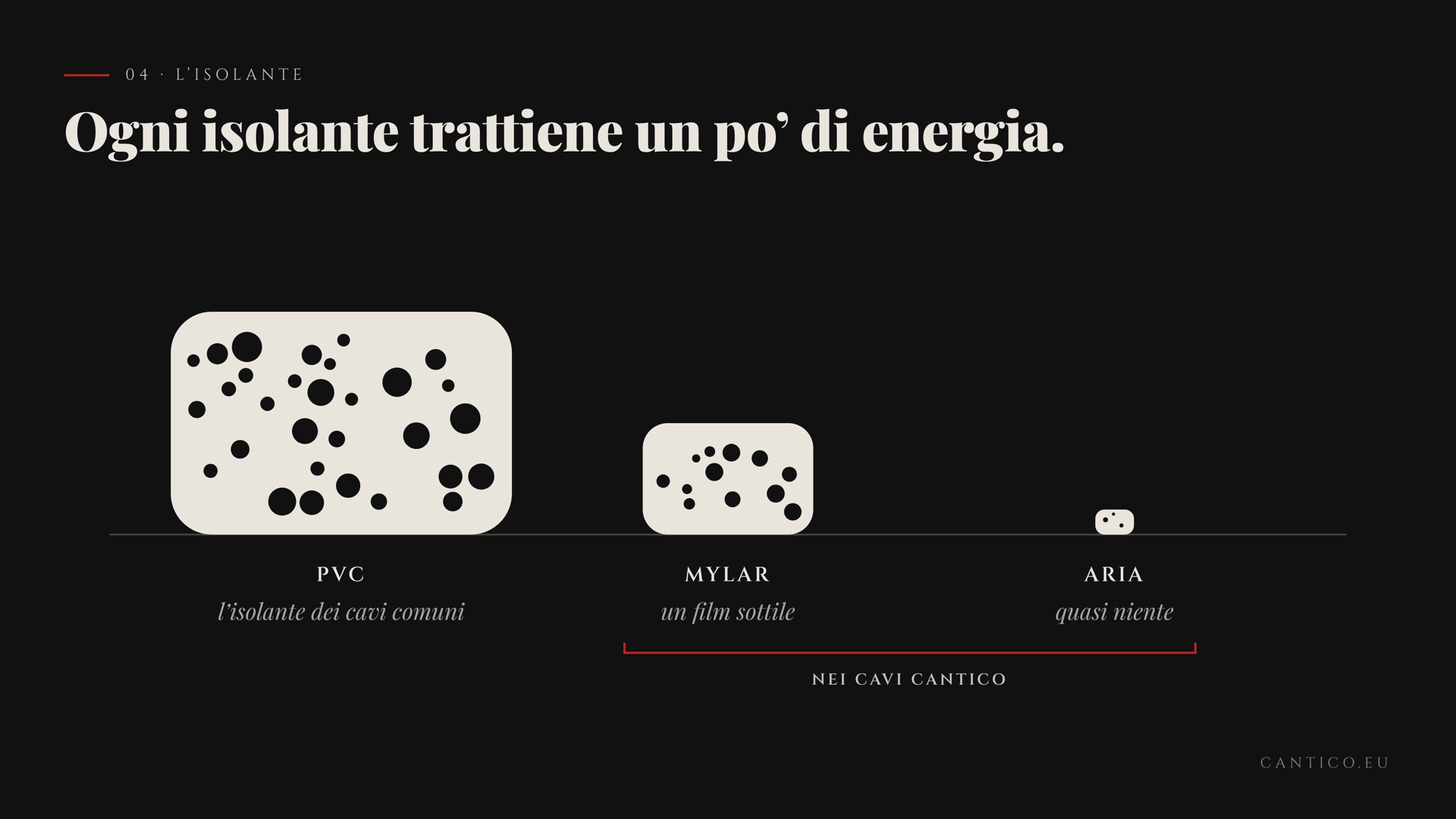
Every dielectric retains a little charge: the thick PVC of ordinary cables retains a lot, air practically none. Each conductor is wrapped in a Mylar film just a few microns thick, and around 80–90% of the volume surrounding the conductors is air. Teflon, ideal on paper, was ruled out because it is piezoelectric and generates noise when mechanically stressed. The Mylar also protects the conductors from abrasion inside the jacket. Hence the name: aere is the word for air in Saint Francis’s Canticle of the Creatures.

Sprung Banana Plugs

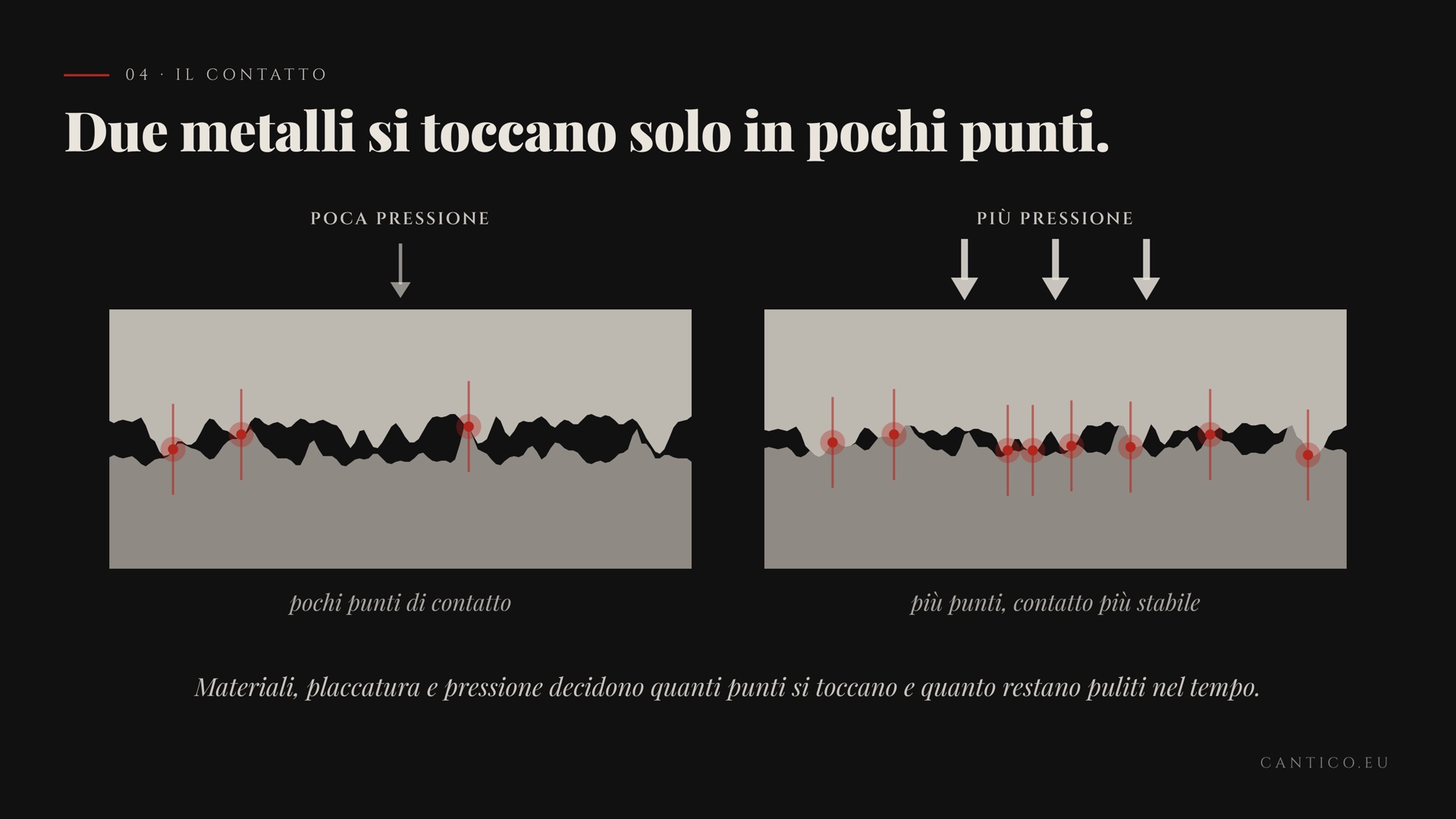
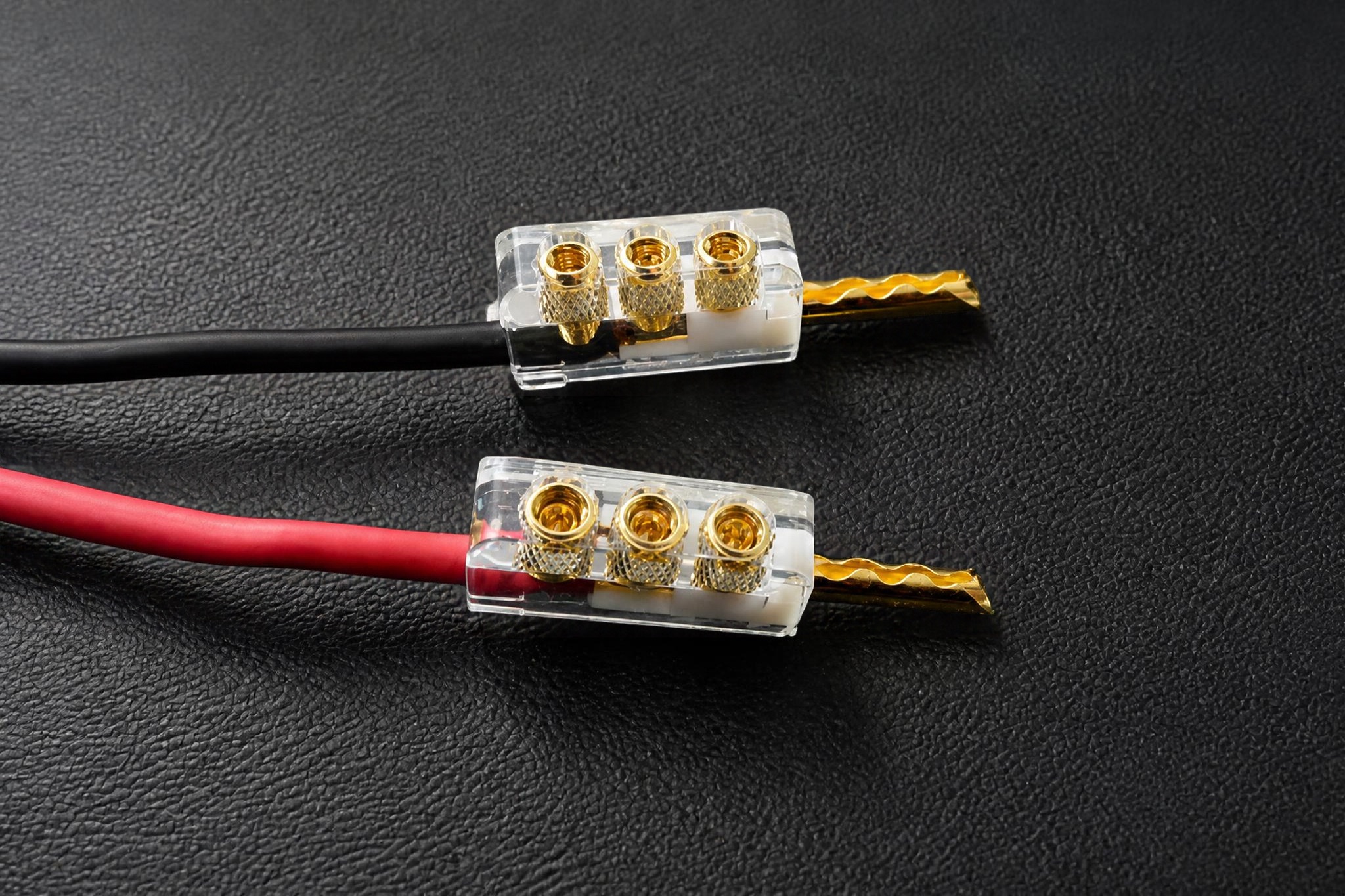
Each banana is formed from a sprung sheet rolled into a tube: in the binding post it presses with its whole surface, spreading the pressure evenly, with the smallest possible mass of metal. Going from very fine Litz strands into a massive connector is never a good idea, so the connector is kept as light as possible. The Litz wire runs all the way to the pin, with no intermediate leads. These connectors were chosen for how they work, not for the name they carry.

3D-Printed Housings

The connector housings are 3D-printed in-house in a tough UV-cured resin with physical properties similar to ABS, and carry the Cantico lettering. The cable is locked by three set screws: one on the jacket and two that clamp the conductor against the pin.

Medical-Grade Silicone and PET

The conductors run inside a medical-grade silicone tube that keeps their geometry unchanged over time, protected by a PET outer sleeve. Outer diameter: 12 mm; the cables stay flexible and easy to handle.

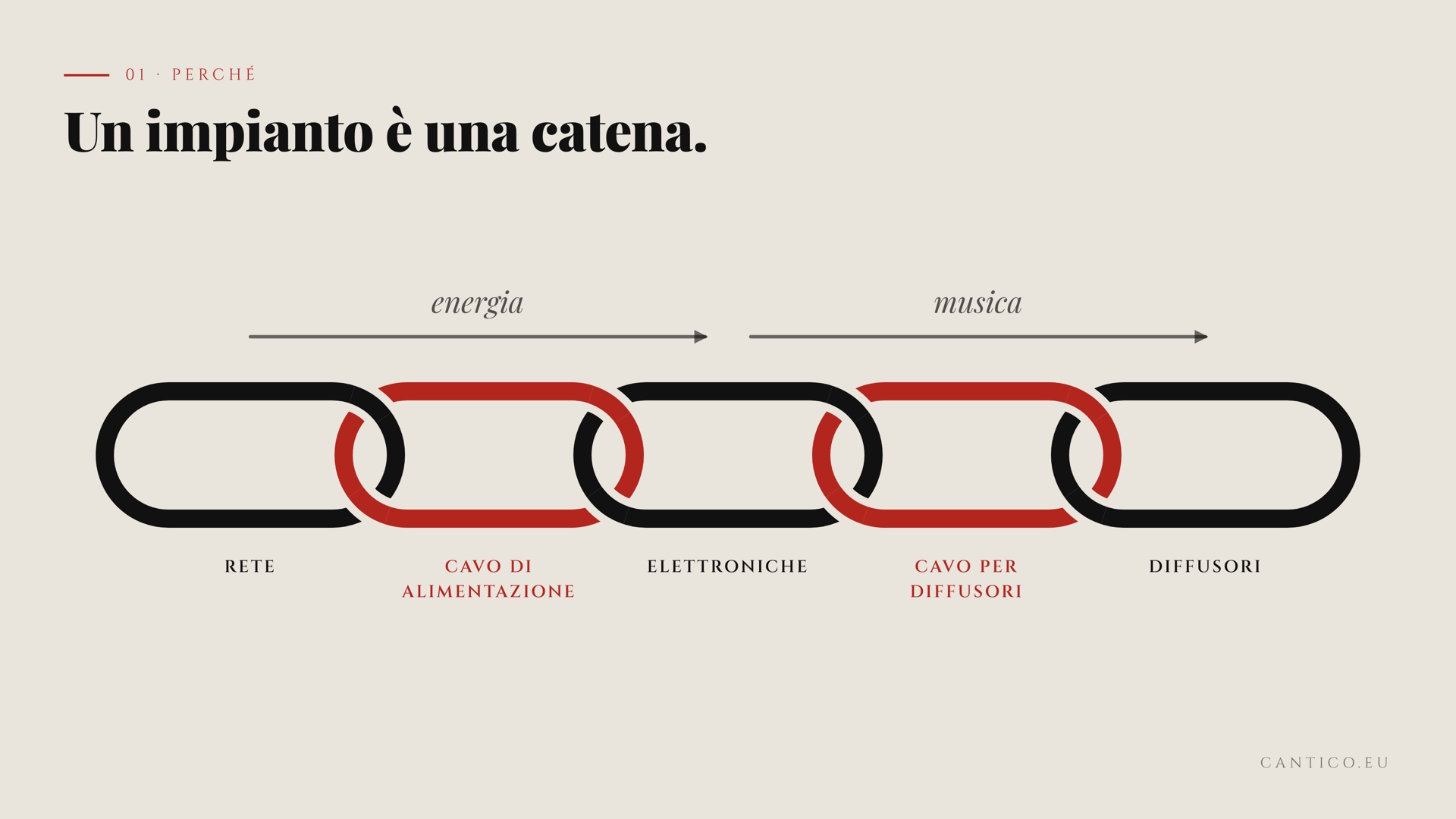
A hi-fi system is a chain: mains, power cable, electronics, speaker cable, loudspeakers
Skin effect: solid wire compared with Litz wire
Two metals touch only at a few points: contact pressure
Aere speaker cable cross-section, layer by layer
Every insulator retains some energy: PVC, Mylar and air compared
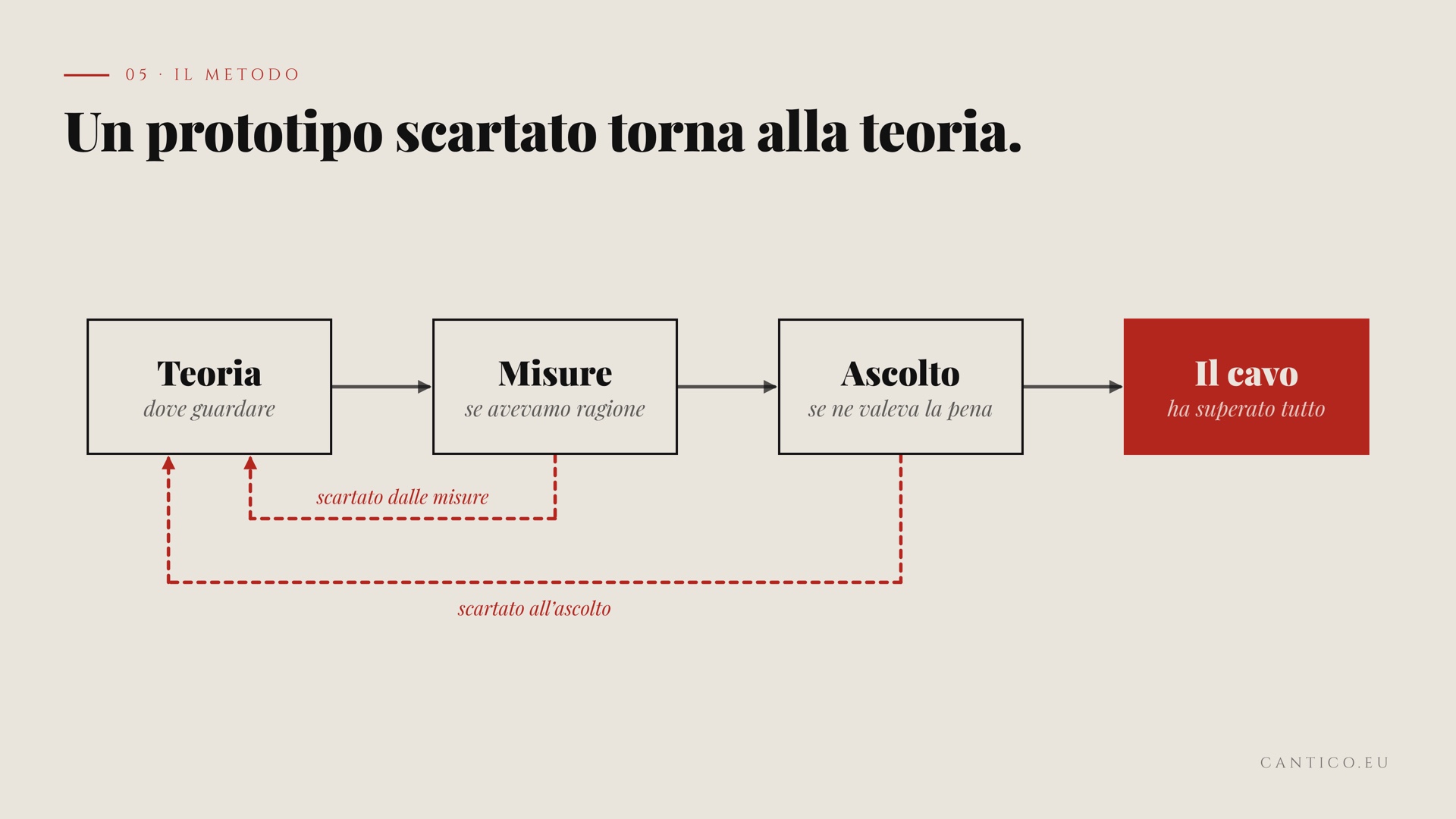
Development method: theory, measurement, listening
Aere speaker cable sprung banana plugs
Cantico Aere speaker cables in their carry case
Aere sprung banana plugs, close-up
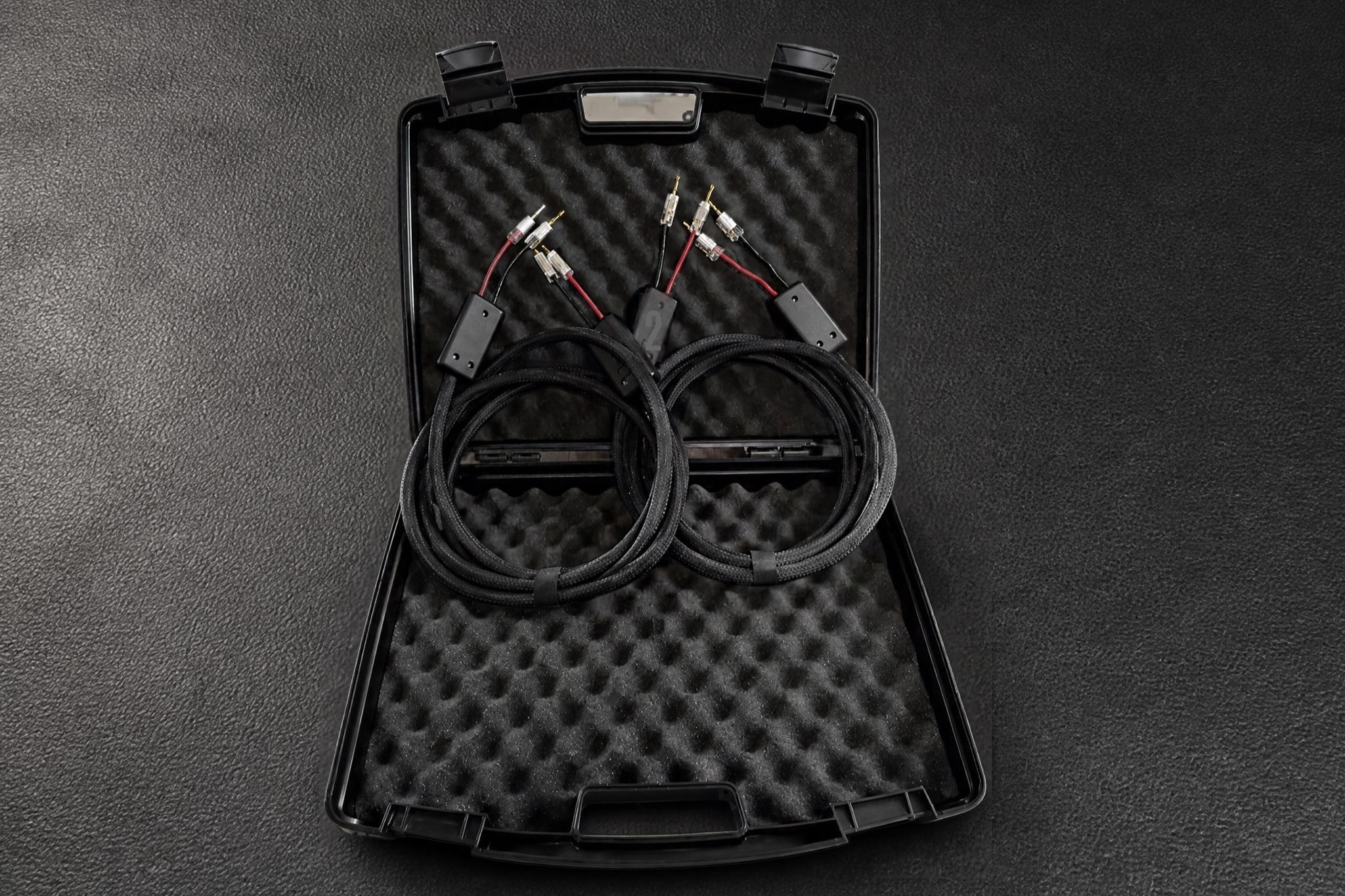
Cantico Aere speaker cables, pair

Theory, Measurement, Listening

Cantico Aere speaker cables coiled in the carry case

Aere started from theory, was then measured, and finally listened to. Measurements on the most promising prototypes tested the theory against reality and made a first selection; the survivors were heard by trusted listeners, who did not know which cable they were listening to, against reference cables costing three to four times as much. Every pair is then built by hand and takes a full day’s work: the Litz is cut, laid out and left to relax, the ends are tinned straight away, and only then does assembly begin. The cables come in their own carry case.

Technical Performance
  • Very low inductance, relatively low capacitance
  • Conductor behavior considered from DC to 200 kHz
  • Self-shielding, unshielded geometry
  • Stable conductivity over time
Audiophile Refinement
  • Correct tonal balance, with every range in proportion
  • Realistic, information-rich highs and a natural midrange
  • Controlled, present bass: impulsive when needed, delicate and articulate when needed
  • A cable that does not play: it lets the rest of the system play

Technical specifications

  • Type: Speaker cables, pair
  • Length: 3 m
  • Configuration: Single wiring
  • Conductors: 2 Litz conductors per cable, 140 enameled strands × 0.2 mm each
  • Cross-section: approx. 4.4 mm² per conductor
  • Insulation: Mylar film on each conductor, air
  • Geometry: Twisted pair, self-shielding, unshielded
  • Jacket: Medical-grade silicone tube, PET outer sleeve
  • Outer diameter: 12 mm
  • Terminations: Sprung banana plugs, 3D-printed resin housings, three set screws
  • Packaging: Carry case
  • Manufacturing: Hand-assembled in Italy

Aere is designed to let your amplifier and loudspeakers sound as they are, today and ten years from now. Words only go so far, though: these cables have to be heard.

Silvio Germano Ricci
Owner e Founder

NEXT PROJECT

Aere Power Cable

Cables